
Gene Johnson and Peter Cardinal: A Search Made Personal
The Hot ZoneThis thread traces Gene Johnson’s response to Peter Cardinal’s death, from laboratory identification to a sensitive field investigation that connects the boy’s final journey to Kitum Cave.
increasing Bearing strength in each event
 decreasing
Bearing strength in each eventdecreasingA Stranger’s Sample

A Case Arrives in a Box
An Uncertain Decision
Gene Johnson receives serum from Peter Cardinal, a ten-year-old boy who has died after a severe illness at Nairobi Hospital. The sample arrives unofficially wrapped and transported, with little initial certainty that it will reveal anything beyond another false alarm.
Johnson considers destroying it rather than spending the night on an uncertain investigation. He ultimately decides to test it before the serum deteriorates, a choice that brings him into contact with a child whose name he will soon learn through the virus in his blood.
The Work Becomes Personal
The sample’s significance grows when it infects monkey cells and kills animals in later testing. Johnson realizes that the illness was caused by a highly virulent agent, not an ordinary disease.
The boy is initially a laboratory case, but the scientific question quickly acquires a human dimension: what happened to him, where was he exposed, and could the source be found? Johnson’s technical work becomes the first step toward reconstructing the last weeks of a family’s life.
A Family’s Account
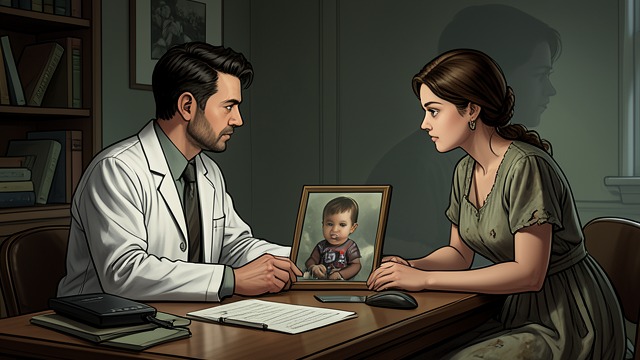
Listening to the Bereaved
The Interview
To find out where Peter Cardinal might have encountered the virus, Johnson contacts Peter Tukei and asks him to obtain the boy’s history. Johnson later travels to Kenya with Tukei and visits the Cardinal family home in Kisumu.
Johnson admits that he is nervous about speaking with Peter’s parents. He is a field scientist rather than someone experienced at comforting a grieving mother, and he remembers his own father’s death as he tries to imagine what the family has endured.
Respect Before Explanation
The parents describe Peter and his sister as inseparable during his visit. Johnson listens for differences in what the siblings did, because only Peter became ill, but the questioning is inseparable from the family’s loss.
His scientific purpose requires details about the boy’s movements, yet the conversation is not treated as a mere extraction of data. Johnson must ask a bereaved family to revisit their son’s final journey in the hope that their memories may reveal how the virus reached him.
The Cave Clue
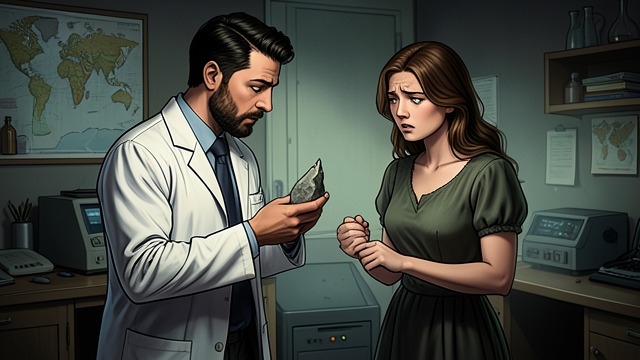
A Detail That Changes the Search
Peter’s Interest in Rocks
The Cardinal family recalls that Peter was an amateur geologist and wanted to collect crystals from Kitum Cave. He had struck the cave walls with a hammer and brought rocks home, while his sister did not share this particular activity.
The difference offers Johnson a plausible explanation for why the siblings’ experiences diverged. A small cut from a crystal contaminated by an animal source is possible, but the precise route remains uncertain.
A Clue, Not a Comfort
Johnson recognizes that the cave links Peter’s story to Charles Monet’s earlier illness. The discovery gives the investigation a geographic focus, but it does not provide the family with a reason that can undo the boy’s death.
For Johnson, the clue deepens rather than resolves the case. It suggests where to search and what contact to consider, while leaving the virus’s natural host and the exact moment of infection unknown.
Into Kitum Cave
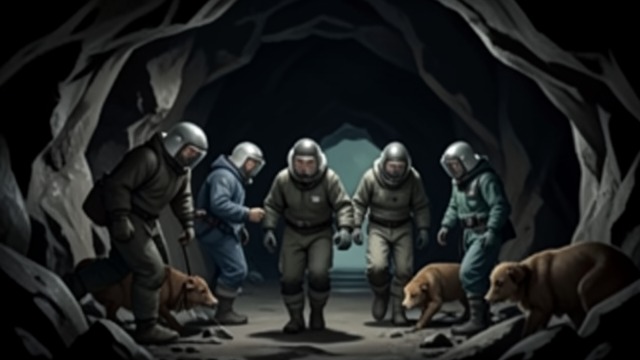
Following Peter’s Last Journey
Returning to the Site
Johnson helps organize an expedition to Kitum Cave, where Peter may have encountered the agent that killed him. The team brings protective equipment, sentinel animals, and scientific tools, attempting to search a dangerous environment without exposing the investigators unnecessarily.
The expedition’s work is shaped by the boy’s case, even though it cannot recreate his precise movements or identify the moment of transmission. The cave becomes both a research site and the place where a family’s memory has directed the investigation.
A Difficult Search
Johnson’s team examines animals, insects, and cave conditions but finds no evidence that identifies the virus’s reservoir. The sentinel animals remain healthy, and the samples yield no decisive answer.
The failure is emotionally complicated. It disappoints a scientist who hoped to locate the source, but it also leaves the Cardinal family’s loss without a definitive explanation. The expedition can follow Peter’s trail only so far; beyond that, the biological mystery remains hidden.
A Case That Endures
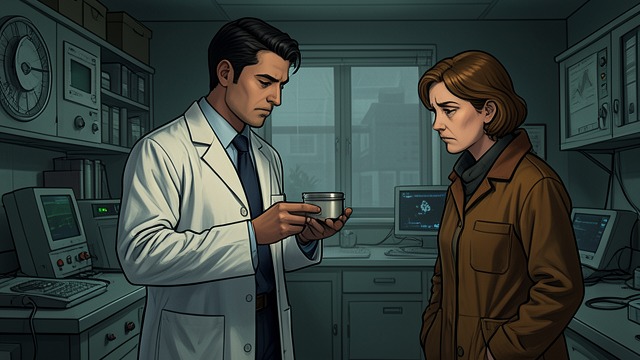
Memory Without Closure
The Limits of the Evidence
The investigation does not establish where the virus lives in nature or prove exactly how Peter became infected. His cave visit remains a powerful clue, but a clue is not a complete explanation.
Johnson’s work preserves a trace of the boy’s last journey in scientific inquiry. The connection between the case and Kitum Cave becomes part of the continuing effort to understand Marburg, even as the source remains unresolved.
A Scientific Bond Across Loss
Peter never meets Johnson, yet his case changes the scientist’s actions: Johnson tests the serum, approaches the family with care, and organizes a search focused on the place the boy visited. The relationship is indirect, formed through evidence and remembrance rather than personal acquaintance.
That distance does not make the inquiry impersonal. Johnson’s unease at speaking with Peter’s parents and his persistence in following the cave lead show how a scientific investigation can carry a moral obligation to the person behind the sample.
September 1987, after Peter Cardinal’s death in Nairobi
After the virus is identified, during Johnson’s investigation in Kenya
During the family interview and follow-up, 1987
1988, during the Kitum Cave expedition
After the 1988 expedition, in the closing movement of the investigation
